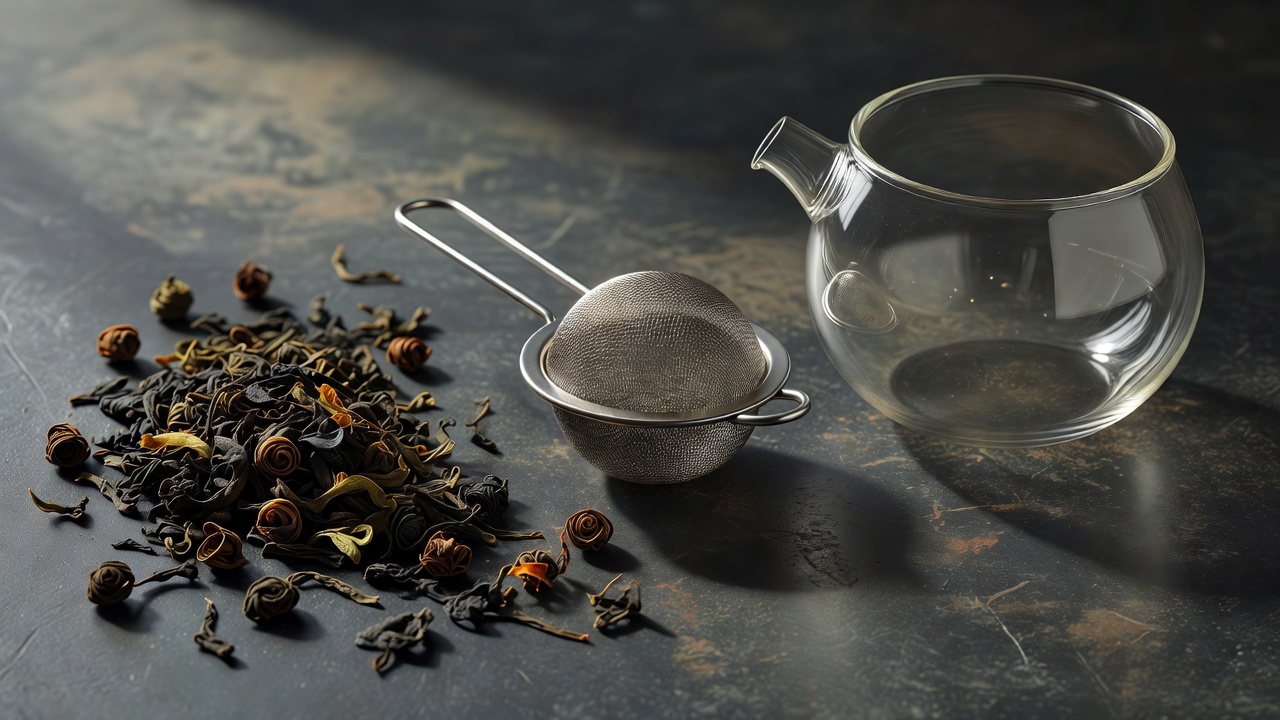
A brew is not a finished cosmetic
Homemade tea rinses are often described as a simple way to add shine, reduce shedding or refresh the scalp. Those claims should not be treated as established outcomes. A kitchen infusion has no fixed extract specification, no verified delivery system and usually no preservation strategy. Its color and aroma do not tell you how much of a particular compound it contains or what it will do when applied to hair.
Tea variety, leaf processing, storage, water composition, brewing time and temperature all influence the result. A stronger-looking brew is not automatically more effective or better tolerated. Nor does research on a purified tea constituent provide a validated recipe for a rinse. Without directly relevant evidence, there is no sound basis for prescribing a particular strength or schedule as a hair-growth intervention.
A tea rinse also lacks the surfactant system of a shampoo and the designed conditioning system of many conditioners. It should not replace needed cleansing, a conditioner that helps prevent tangling, or a prescribed scalp treatment. If your current routine is comfortable, choosing not to add a rinse is a reasonable and often simpler decision.
Consider what can go wrong
Plant-derived can still irritate
A familiar drink can cause an unwanted skin response. Blended teas may also contain fragrance-like flavorings, spices or other botanicals.
Clean is not sterile
Kitchen vessels and storage containers do not create a sterile process. Refrigeration does not turn an infusion into a preserved cosmetic.
Do not apply a homemade rinse to broken, inflamed or actively irritated skin. Avoid it if you have a known allergy to the ingredients. People with an existing scalp condition should ask a qualified clinician before adding an unpreserved botanical preparation. A small-area trial cannot guarantee that a later application will be free of irritation or allergic reaction.
Dark infusions may leave unwanted staining on towels, pale hair or porous, chemically treated lengths. Hair may also feel coated, rough or harder to detangle. These outcomes depend on the preparation and hair condition; they are reasons to be cautious rather than predictable benefits or harms for everyone. Test compatibility conservatively and do not assume that a temporary color change means the hair has become healthier.
If you still choose to experiment
This is not a recommendation to use a tea rinse. If you decide to try one despite the uncertainties, keep the experiment simple. Know every ingredient in the tea, use clean equipment, strain out particles and let the liquid cool fully before any contact with skin. Never pour hot tea onto your scalp. Keep it away from your eyes and do not add essential oils, acids or concentrated extracts to make it “stronger.”
Prepare only what you intend to use immediately and discard leftovers. There is no validated safe storage period for an arbitrary home recipe, and a normal smell or appearance does not establish microbiological safety. A used spray bottle can introduce additional contamination. Do not top up old mixtures or combine an infusion with a commercial product inside its original container; dilution can disrupt that product's preservation system.
Keep the rest of your routine stable and stop if the rinse causes discomfort. Rinsing it out rather than extending exposure does not establish safety, but leaving a preparation on longer is not evidence of greater benefit. If you experience burning, rash or worsening itching, stop using it and seek advice if symptoms persist. Serious swelling or breathing difficulty requires urgent medical care.
Why preservation is a formulation task
Water-containing cosmetics need a strategy to control microbial contamination throughout their intended use. That can involve the formula, packaging, manufacturing controls and suitable testing. Adding a household ingredient is not a substitute for this work. Vitamin E is not a broad-spectrum preservative, and essential oils do not make an improvised water-based mixture reliably safe.
ISO publishes standards including ISO 11930 for evaluating antimicrobial protection of cosmetic products and ISO 17516 for microbiological limits. Their existence illustrates the difference between a controlled product assessment and an assumption that brewing or refrigeration is enough. This site does not claim that a home preparation meets either standard.
The FDA's microbiological safety information explains why contamination matters in cosmetics. The National Center for Complementary and Integrative Health provides botanical health background, but information about drinking an herb should not be transferred directly to scalp application.
A more interpretable alternative
If you like the idea of tea-inspired haircare, a finished product with clear directions and accountable manufacturer information is generally easier to evaluate than an improvised rinse. That does not guarantee effectiveness or tolerance; it gives you a defined product to assess. Check the intended use, full ingredient list and relevant evidence instead of assuming that commercial or homemade automatically means better.
For many readers, the most useful result of this comparison is not another step. It is permission to keep a reliable cleansing and conditioning routine, enjoy tea as a drink if appropriate for you, and leave unsupported scalp promises out of both.